


The reflex after a first fall is the bathroom. Grab bars, a non slip mat, a raised toilet seat. These help, but they are a small slice of the picture.
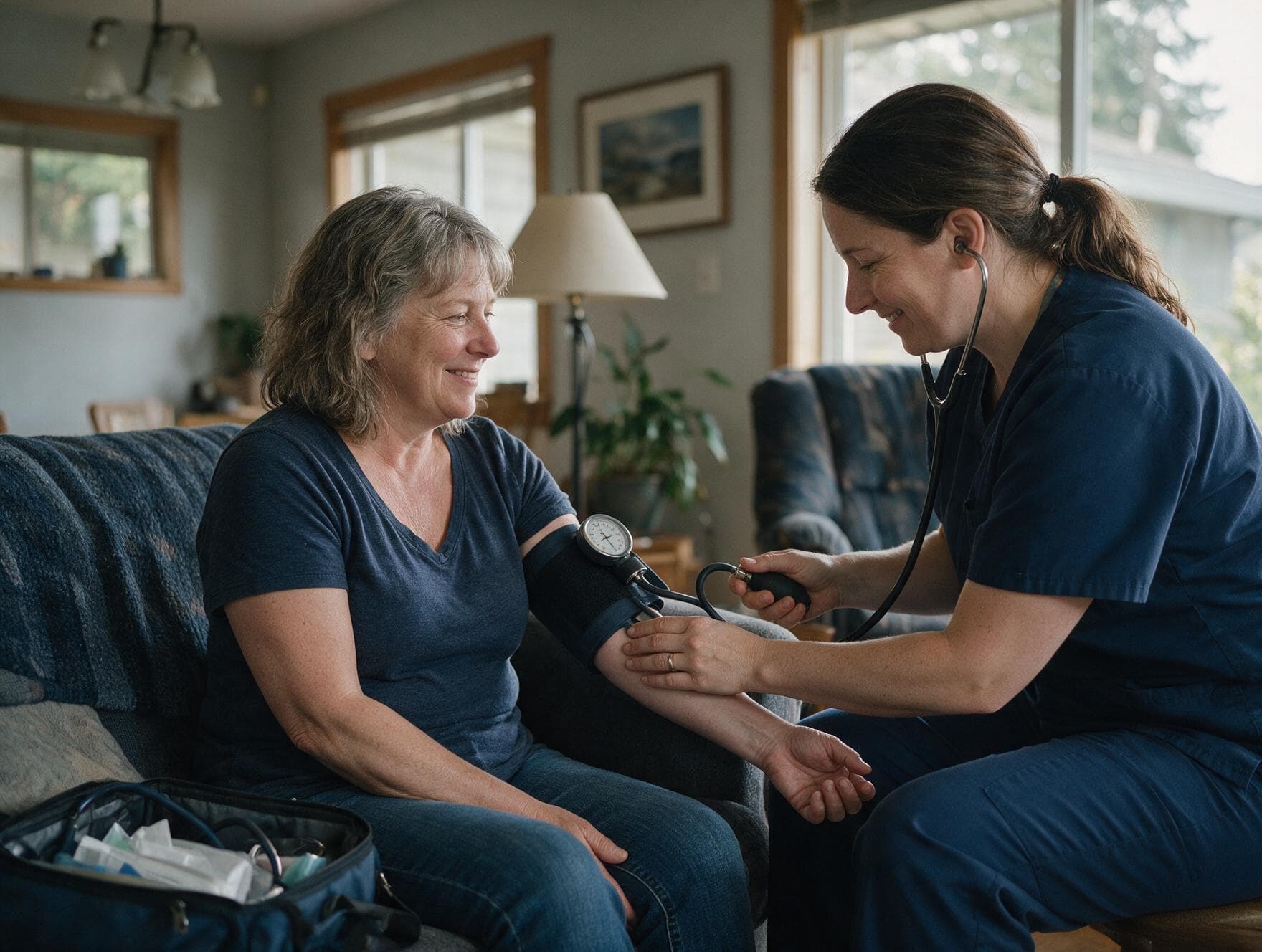
A proper home safety review is a walk through. Slow, room by room, with the clinician looking at the home the way someone tired, distracted, or moving with a cane would experience it.
Floors
We pay attention to transitions: door thresholds, the lip between hardwood and rug, the edge of a bath mat. These are where most household falls actually start. Loose rugs over hard floors get flagged. So do high pile rugs near doorways.
Most falls don't happen on the obvious obstacle. They happen on the one that's been there for thirty years and become invisible.
Light
Bathrooms and stairwells, but also the path from bedroom to bathroom at 3 a.m. Motion activated nightlights are inexpensive and change outcomes more than people expect. Daylight matters too, since heavy curtains drawn during the day can dim a room enough that depth perception drops.
Kitchen
Reaches. The cabinet above the fridge where the holiday platter lives is a step stool risk. We move daily use items to waist or shoulder height and put the once a year items somewhere safer.
Stove timers, range hood lights, water temperature limits at the tap, these come up too, especially for households living with cognitive change.
Footwear
Slippers without backs and bare feet on hardwood are surprisingly common contributors. A pair of supportive house shoes is one of the higher yield, lowest effort changes in any review.
The rest
Bed height, chair height, the depth of the cushion someone has to push out of, the handrails on the stairs, the angle of the doorbell to the front door. None of these are dramatic. All of them add up.
After the walkthrough we leave you with a written list, sorted by what to do this week, this month, and eventually. Most of the items are cheap or free. None of them are a guarantee. Together, they tilt the odds in a real way.