




Most home care arrives after something has already gone wrong. A fall. A medication mix up. A discharge from hospital with three new prescriptions and no follow up call. Families end up navigating the system in crisis mode, making big decisions on bad days.
Proactive care is the opposite shape. The work happens before the crisis, not after it. Here's what that looks like, month to month, in a real household.
Month one: understanding, not advising
The first month is mostly listening. A free initial consultation surfaces who's involved already: the family doctor, the pharmacy, the family caregiver doing the heavy lifting. Then a comprehensive in home assessment by a physician and a nurse. Clinical history, functional review, a walk through of the home itself.
We don't issue recommendations yet. We're still understanding.
The care plans that work are the ones the family already half believes. We write down what the household already knows about itself, and then add the parts the medical system tends to drop.
Months two through six: the cadence
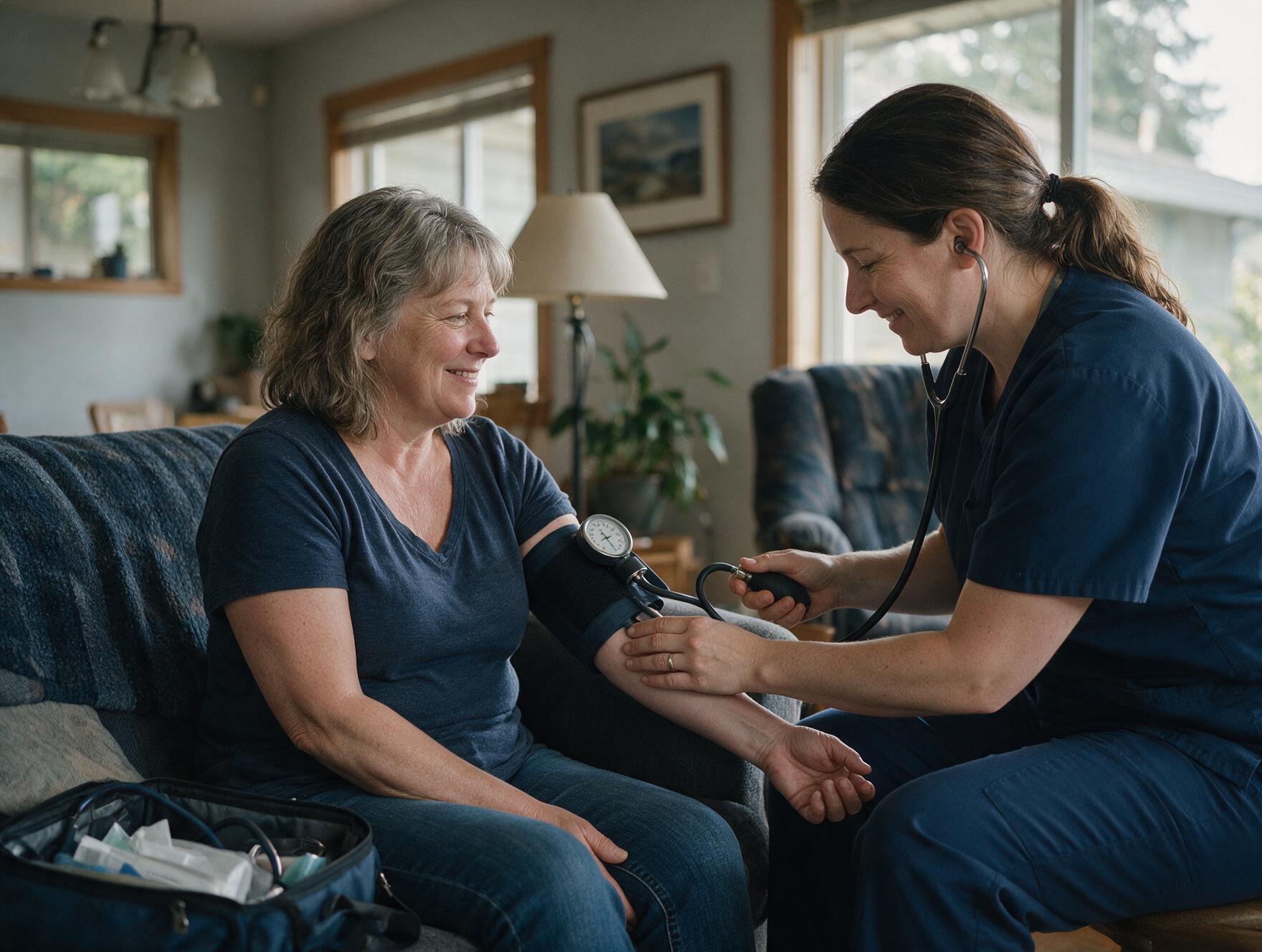
Most households settle into a monthly or quarterly cadence after the initial assessment. What happens at each visit depends on the plan: medication reviews, follow up nursing visits, coordination calls with the family doctor, home safety check ins, and, quietly, building the relationships that make harder conversations possible later.
What changes
Two things shift in households that move from reactive to proactive care:
- Smaller things get caught earlier. A new ankle swelling, a subtle change in cognition, a medication that's quietly stopped being taken. These are the inputs that turn into hospital admissions if no one is watching.
- The family stops carrying the coordination. One coordinator means one phone call instead of five. One written plan means everyone, including the GP, pharmacy, family, and on call team, is looking at the same document.
It's not glamorous work. Most of what we do happens before anything dramatic does. That's the point.